"Surf Videography in Santa Teresa: How to Capture the Tropical Light"
Near the equator the sun sits overhead at midday and the evening closes in minutes. How that reorganises a shooting day, and what I carry.
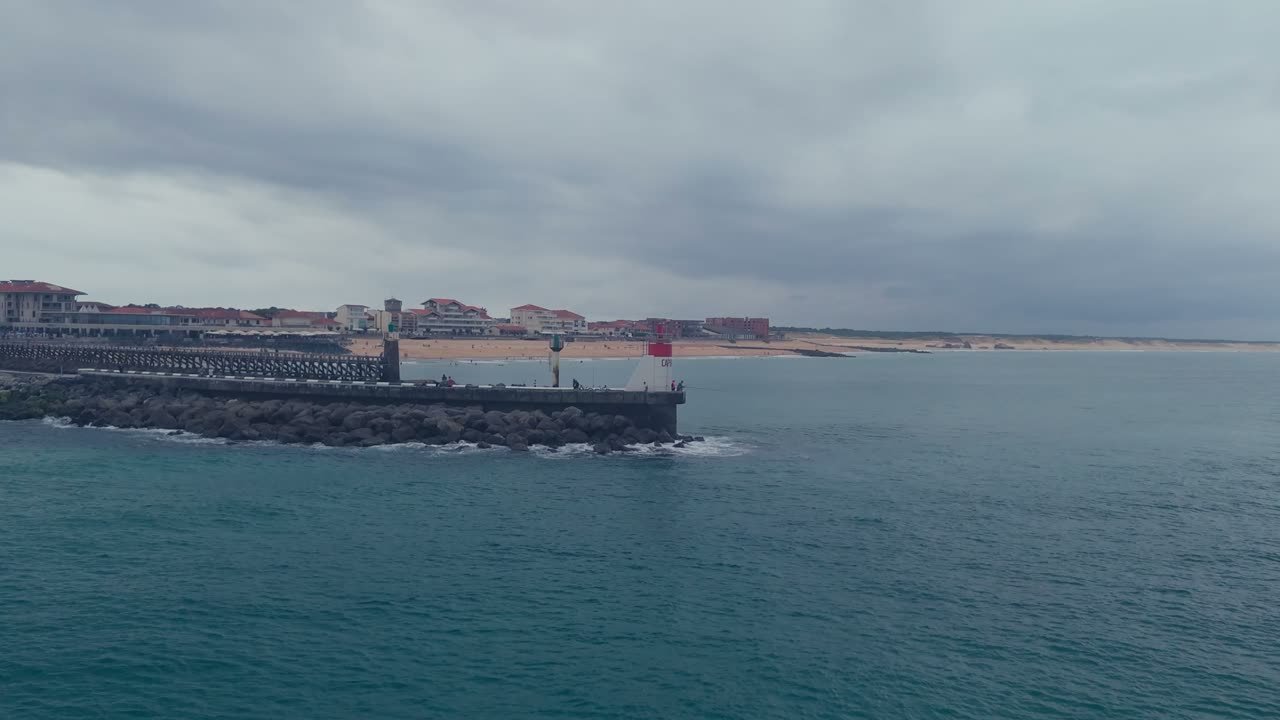
Most of what I know about filming surf I learned on a beach break in the Landes, where the low light lasts and the evening gives you room to move.
Santa Teresa is at 9° north. The sun behaves differently there, so the day has to be built differently.
Midday is for the drone, not the beach
At that latitude the sun passes almost straight overhead. For a surfer filmed from the sand, that's the hardest light there is. It flattens the face of the wave and turns the water into a sheet of glare.
Seen from above, the same light is the reason tropical surf footage looks the way it does. It goes into the water instead of skimming off it, and the colour comes up.
So the drone flies when I'd normally be having lunch, and the beach and water work happen early and late. At home I treat the middle of the day as dead time. There it becomes the aerial slot.
The evening arrives and leaves quickly
Near the equator the sun crosses the horizon at a steep angle, so the warm light doesn't hang around. Twelve hours of daylight all year, and a dusk measured in minutes rather than the long window I'm used to.
Plan one shot for it. Scout the position in the afternoon, be standing there before it starts, and accept that there won't be time to reframe and try something else.
Facing west, with hills behind
Santa Teresa looks out onto the Pacific, which puts the sunset over the water, and puts sunrise behind the hills, arriving late and already fairly high.
Same orientation as the Landes, different terrain behind the beach, so the usable morning light starts at a different time. It's the sort of thing worth checking before booking anything.
Working into the light
With the sun going down over the water, most evening frames are backlit. That's where the good images are: spray lit from behind, a silhouette on the face, the surface turned to metal.
It's also where automatic exposure gives up. I set exposure by hand for the highlights and let the surfer go dark. A silhouette against lit water reads fine; a well-exposed surfer against a blown white sky reads as a mistake.
What's actually in my bag
Nothing exotic, and it fits in a waterproof RVCA pack.
A DJI Mini 4 Pro with four batteries. That's the aerial work, and four is what a real day costs. A gimbal, mostly for the ground sequences when a school is getting ready on the sand. A 6× telephoto on my iPhone, which is what I shoot the line-up with; I record in Log ProRes LT through the Blackmagic Camera app, 4K at 60fps, which gives me enough latitude to grade a backlit frame without it falling apart.
For the water: a housing that vacuum-seals, bodysurfing fins and swimming goggles. Then the ordinary things that decide whether a day goes well: sunscreen, always, and a bottle of water.
And a tripod, which does double duty: it holds the camera, and it holds the bag off the wet sand when I'm working close to the shore break.
That last one sounds trivial until you've had a bag go under.
Humidity and salt
Warm wet air meets cool glass and fogs in seconds. Let everything reach ambient temperature before opening a housing, keep silica in the bag, and wipe more often than seems necessary: salt spray dries into a haze you'll only see in the footage.
Water work is the same craft
Sit inside the surfer's line and never in front of it. Take a fixed reference on shore and check it, because the current moves you without telling you. Wide lens, wet the dome before the take, high frame rate.
The difference is the water temperature. Filming for two hours without a wetsuit is a different kind of tiring, and the sun on the back of your neck has consequences. Shorter sessions, more often.
Written in August, from France
All of the above comes from craft that travels, from the kit I actually use, and from things anyone can verify: latitude, orientation, how light and water behave.
The local knowledge is what's missing. Which hour someone who's been there ten years would tell me to be on the sand, what the wet season does to a plan, where the light does something I'm not expecting.
That article gets written after a few months of shooting there.
If you want to see the surf work behind this one, it's here.