Sharing the Water: Where I Put a Drone on a Busy Beach
A kite sail came into my frame and hit the aircraft. It recovered. Here's how that day changed the way I choose a flight path.
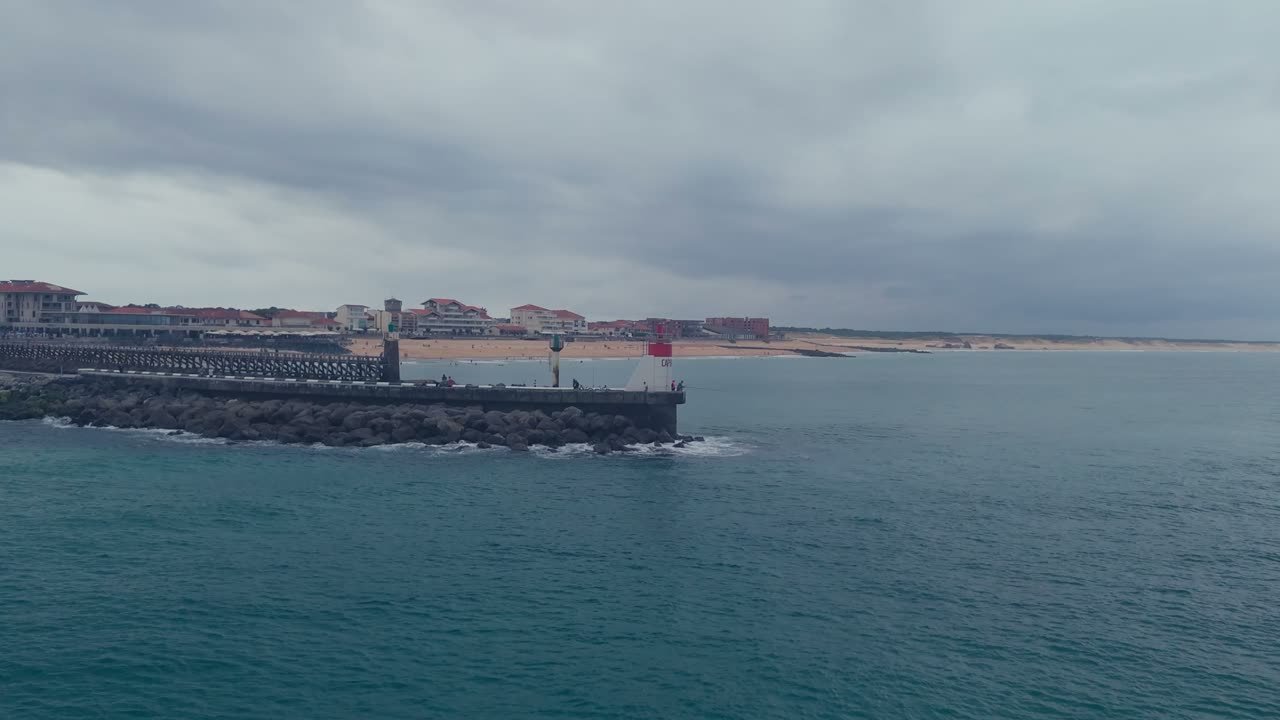
I was filming for a kite school at the Penon. A sail came up into the frame, touched the aircraft, and it dropped before righting itself on its own.
Nobody was underneath and the gear was fine. But it taught me something in ten seconds that I'd have taken a season to work out on my own: a kite climbs much faster, and much higher, than it looks like it does from the sand.
What I stopped doing
I used to choose the path that gave the best shot. Now I choose the path where, if something goes wrong, the aircraft doesn't cross anybody.
Those two paths are often close to each other. When they aren't, the second one wins, and the shot I lose is a shot I can get another way.
Three habits that came out of it
Stay higher than the frame wants. A little more altitude costs you some intimacy in the image and buys you the seconds you'd need.
Keep an exit toward the beach. At any point in a movement I want to know which way I'd go if the aircraft started behaving oddly, and I want that direction to be empty sand rather than a line-up.
Never track a subject backwards over water. Flying rearward means the sensors are pointing at where you've been, and over water there's nothing useful to land on if you get it wrong.
Time of day does most of the work
In summer, kiters, surfers and swimmers all share the same stretch of water, and by mid-morning it's genuinely busy.
Flying early solves that almost entirely. There are fewer people in the water, the wind is usually calmer, and you get the best light of the day as a bonus. It's the rare decision that improves the safety and the picture at the same time.
None of this is about being careful
I want to be clear, because it's easy to read the above as a list of restrictions.
Constraints of this kind make the flying more interesting, not less. When you can't take the obvious arc you look for another one, and the movement you end up building is often better than the one you'd planned. It has a reason to be shaped the way it is. Some of my favourite passes exist because a boundary or a group of people forced me off the straight line.
You can also start much simpler than you'd think. A drone that stays high and still, over an empty section of beach, already gives images that are worth having. The complicated movements can wait until the place is familiar.
The coast I'm about to learn
From late September 2026 I'm working out of Santa Teresa, in Costa Rica.
Everything above transfers as a principle. What doesn't transfer is the local knowledge behind it, which is exactly what makes the first weeks somewhere new slower. I don't yet know where the line-up sits at different tides, where the school groups go in, or how the Costa Rican rules are written. I'll read those properly before the first flight rather than assume they resemble the French ones.
So the first flights there will be conservative, and they'll get more interesting as the place becomes familiar. That's how it went at the Penon too, just with a lesson in the middle.
The surf and sport work, with what each option includes, is right here.
More in Surf & sport video