How to Film a Luxury Villa in Santa Teresa, Costa Rica
The light is vertical, the house has no walls and the lens fogs. What I'm changing in my method before I get there in September.
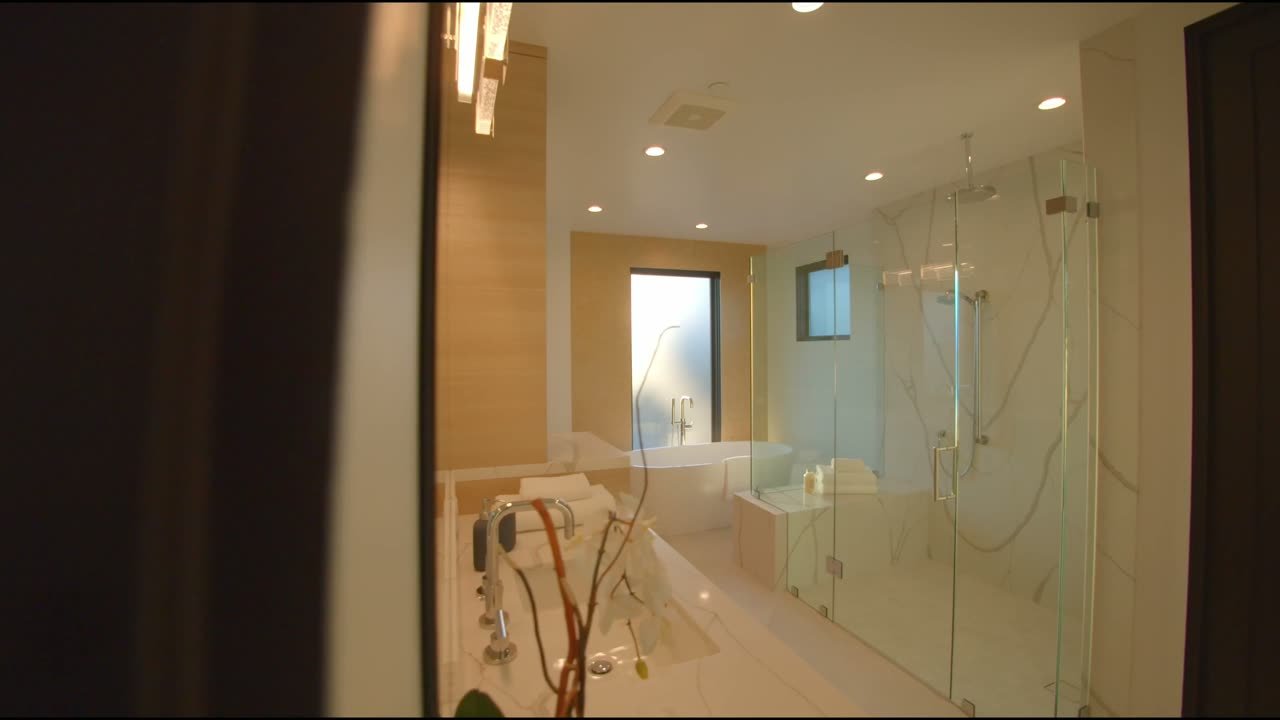
I film properties on the Landes coast, in south-west France, and I'm moving to Santa Teresa in September. I've been going through my method to work out what still applies down there.
Quite a lot does. Some of it clearly won't, and I'd rather set that out now than discover it on someone's terrace.
The order of a property film travels
You open on the place, you install the building in the middle, you finish on the life. People need to understand what they're looking at before they can imagine themselves in it.
One habit I'll be keeping: bedrooms go in the middle of the edit. They're rarely the most interesting rooms and they start to look alike after the second one, so I put them where attention naturally dips, and keep the opening and the ending for what actually holds a buyer.
The light is the real change
Santa Teresa sits near 9° north. The sun climbs close to overhead at midday and it drops fast: twelve hours of daylight all year and a short dusk, rather than the long evening I'm used to.
On a house near Soustons this spring, the whole film came down to one decision: shooting early, with the west light still low, and opening every curtain in the place so the light came in directly. It gave the house a character it doesn't have at two in the afternoon, and it made the grade far easier afterwards. The agent was delighted, which is usually the sign you got the hour right.
That decision, pick the hour before you pick anything else, is what I'll carry over. What changes is that the good hour in the tropics is narrower, so there's no room to try three things and keep the best.
A house that opens onto jungle
Villas on that coast tend to have sliding walls, a roof over a terrace, a pool running into the garden and trees a few metres behind.
You're almost never in a room. You're in a space that's half deep shade and half full sun, and the gap between the two is much wider than in a French interior.
I expose for the bright side and lift the shade with what's already in the house: open the far side, let the pool throw light back up, use pale stone as a reflector. What I want to avoid is the frame where the terrace is white and the room behind it is a hole.
The drone problem gets harder, not easier
Flying over a neighbour's land is not something I do, and on plots that aren't square it takes real work to avoid.
I've spent whole approaches building a movement that shows the property properly while staying inside its boundary: arcs that stop short, rises that lean away, sometimes an angle I wouldn't have chosen if the land had been a rectangle. It's the part of the job nobody sees.
In a place where houses sit close together under tree cover, with rules I'll need to read carefully before the first flight, I expect that to take longer rather than less.
I've also given up on shots because of wind: gusts too strong for a clean pass over water, so I came back the next morning and got them properly. On an exposed Pacific coast I imagine that'll happen more often, and it's worth building into the schedule rather than fighting.
Humidity, which I've never had to plan for
Warm wet air on cool glass fogs in seconds, and every filmmaker who's worked in the tropics says the same thing.
So: let the gear reach ambient temperature before opening a housing, keep silica in the bag, and give the first twenty minutes of the day to that rather than wiping a lens in front of a client.
Length doesn't change
Forty-five seconds to a minute ten, in France or in Costa Rica. Those are the durations where people watch to the end.
The part I can't write yet
Everything above comes from craft that travels, from what I've actually done on French properties, and from things anyone can look up: latitude, orientation, the way humidity behaves.
What I don't have is the texture. How that light really falls on a pale wall at seven in the morning. What the wet season does to a shooting week. Which hour someone who's lived there for years would tell me to be on site.
I'll rewrite this once I've filmed a few houses down there, and that version will be worth more than this one.
If you'd like to see the property work behind it, it's here.